What Does a Lamb on a Gravestone Mean?
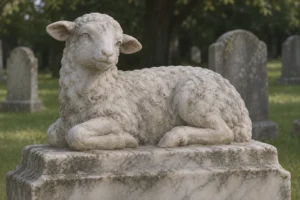
A lamb on a gravestone often prompts questions about childhood and belief. Documented examples show why the inscription matters as much as the animal carved above it.

Gravestones often carry more than a name and a pair of dates. A winged skull, a carved lamb, clasped hands, or a few worn lines can open a window into the lives and beliefs of the people who chose them.
Here we explore gravestone symbols, epitaphs, memorial designs, and the carvers who shaped them. We follow surviving stones, cemetery records, and historical research to understand how people remembered the dead—and why the same image can mean different things in different places.
Look closely. There’s a story cut into that stone.
A lamb on a gravestone often prompts questions about childhood and belief. Documented examples show why the inscription matters as much as the animal carved above it.
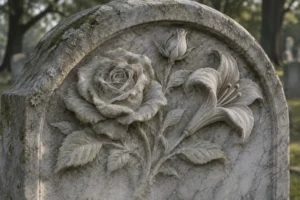
Flowers carved on gravestones preserve choices that real bouquets cannot. Learn how to identify common forms and investigate their meanings without relying on a universal floral code.

A willow and urn gravestone combines two recognizable forms in one memorial. Explore the historical setting of this design and the assumptions its imagery cannot establish.
A broken column gravestone may preserve an intentional design rather than an accident. Its shape raises questions about loss, remembrance and the limits of symbolic interpretation.
Clasped hands on gravestones can invite several interpretations. Compare the gestures, clothing details and inscriptions that help explain what a particular memorial may have meant.
A winged skull gravestone can look startling today. Dated examples reveal how carvers pictured mortality and why similar-looking winged heads should not always receive the same label.
Tree stump gravestones turn a familiar woodland shape into a memorial. Their carved emblems can reveal more than the tree form alone about the people remembered.
Cemetery symbols offer clues about identity, belief and remembrance. Learn how dates, inscriptions and local traditions help separate a plausible interpretation from an attractive guess.